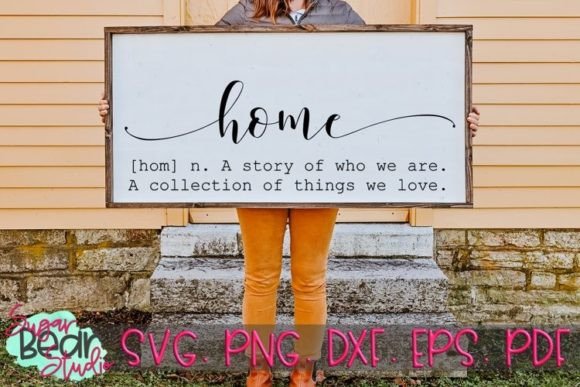
Home: A Story of Who We Are
As a designer who’s stitched thousands of custom pieces—from boutique aprons to nursery wall hangings—I opened Home: A Story of Who We Are a Collection expecting warmth, but not quite this kind of quiet resonance. It’s not a flashy quote SVG; it’s a gentle, grounded statement that lands like a well-worn book on a shelf—familiar, intentional, and quietly confident. I tested it first on a linen-cotton tea towel for a local gift shop launch, then scaled it for a baby onesie line and a set of embroidered sweatshirts for a small-town café. Here’s what held up—and where you’ll want to pause before pressing “embroider.”
First Impressions: Mood Over Markup
The phrase “Home: A Story of Who We Are” reads as cohesive—not fragmented or overly decorative. The layout leans into soft rhythm: balanced spacing, modest letter height, and subtle visual hierarchy (no forced drop shadows or ornamental swirls). It feels handmade without looking handmade-*trying*. That matters. When customers see this on a tote bag or pillow cover, they don’t read “SVG file”—they read *intention*. This isn’t a filler design. It’s a signature piece.
Where It Shines in Real Embroidery Projects
- Custom apparel: Works beautifully on midweight cotton sweatshirts and relaxed-fit tees—especially when centered above the left chest or along the back yoke. The clean lines avoid distortion on knit fabrics if stabilized properly.
- Tote bag design: Stitches crisply across canvas and duck cloth. The moderate width keeps it legible even at 4.5" wide—a sweet spot for shoulder bags and market totes.
- Baby embroidery: Used it on organic cotton burp cloths and muslin swaddle sets. The absence of fine serifs or tight kerning means no thread nesting in tiny corners. A real win for delicate items.
- Holiday embroidery & personalized gifts: Paired with minimalist trees or simple hearts in seasonal mockups, it anchors sentiment without competing. Feels equally right for Mother’s Day, housewarming, or wedding guest favors.
- Small shop product & boutique branding: Because it doesn’t shout, it supports your brand voice—not drowns it. I’ve seen it elevate ceramic mugs (as an iron-on transfer companion), woven labels, and even subtle embroidery on apron pockets.
Where to Proceed With Care
This design breathes best with room to land. On stretchy fabric, like ribbed knits or lightweight jersey, the horizontal flow can pull slightly if under-stabilized—use cutaway + tear-away combo, not just tear-away alone. On dark fabric, test white or ecru thread first: the lowercase “a” and “o” shapes are open enough to fill cleanly, but low-contrast thread will vanish in shadowed curves. And avoid cramming it into hoops smaller than 4"x4"—the word “Story” needs breathing space, and tightening it risks muddy satin stitch transitions.
It’s also not ideal for curved surfaces like structured caps unless resized to ~2.75" max and digitized specifically for crown curvature (this file set is vector-based, not pre-digitized for machine embroidery—so yes, you’ll need to digitize or outsource if stitching directly). Likewise, skip it for ultra-thin silk or chiffon: the implied weight of the phrase asks for structure, not floatiness.
How It Shapes Perception—Beyond the Stitch
Customers don’t buy quotes—they buy meaning made tangible. Home: A Story of Who We Are a Collection delivers that without cliché. On a handmade pillow cover? It signals care, not craft-store filler. On an Etsy listing for personalized baby blankets? It raises perceived value—because it feels chosen, not dropped in. For craft business owners, it’s a rare asset: versatile enough for multiple product lines, yet distinct enough to build recognition across seasons.
I’ve watched buyers linger longer on listings using this design in natural light mockups—especially when styled beside wood, stone, or neutral textiles. It doesn’t demand attention; it earns it. That translates to trust, repeat visits, and quieter, more meaningful engagement than louder, busier designs.
Practical Designer Notes Before You Stitch
- Test the design on scrap fabric matching your final product’s weight and stretch—especially if using textured weaves like burlap or terry cloth.
- Check thread color contrast early: run a black-and-white printable mockup to confirm legibility on both light and dark backgrounds.
- Review stitch density visually—if you’re adding applique or layered elements later, ensure fill areas aren’t overly dense and won’t cause puckering.
- Confirm hoop size compatibility before digitizing: the original vector files (SVG, EPS, DXF) give flexibility, but scaling down too far may compromise clarity.
- Inspect small details in the PDF preview—especially the colon and lowercase “a” shape—to ensure no unintended gaps or thin joins appear when stitched.
- Use appropriate stabilizer: medium-weight cutaway for knits, tear-away for stable wovens, and fusible + tear-away for lightweight linens.
- Verify licensing terms before selling finished products or bundling the digital embroidery file—you’re responsible for commercial use rights, and this listing doesn’t state them outright.
Final Thought: Not Just Another Quote SVG
Home: A Story of Who We Are a Collection belongs in the toolkit of designers who value restraint, makers who stitch with story in mind, and small shops building identity one thoughtful detail at a time. It’s not a quick-win graphic—it’s a considered design asset. Use it where simplicity speaks louder than embellishment: on heirloom baby items, slow-made kitchen textiles, curated gift boxes, and apparel that feels like coming home. In a world of noise, this one hums softly—and that’s exactly why it works.