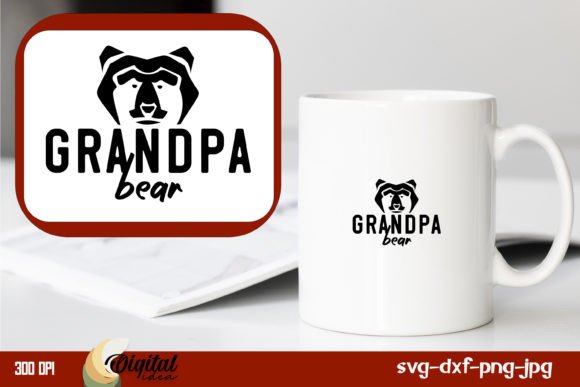
Grandpa Bear: A Warm, Thoughtful Embroidery Design for Real Projects
First Impressions: Gentle, Timeless, and Ready to Stitch
Opening the Grandpa Bear zip folder, I immediately felt its quiet confidence—not flashy, not fussy, but deeply intentional. The design centers on a soft-edged bear figure paired with a short, heartfelt quote (likely “Grandpa” or a variation), rendered in clean, friendly lettering. It’s clearly crafted for warmth over whimsy: rounded contours, balanced negative space, and a gentle hierarchy between figure and text. This isn’t a cartoon—it’s a tender visual shorthand for love, memory, and intergenerational connection. As a designer who regularly selects embroidery files for client projects, I knew right away this would shine on items meant to be held, gifted, and kept: baby blankets, kitchen towels, linen pillow covers, and personalized sweatshirts for family reunions.
How Grandpa Bear Performs in Real Embroidery Work
I tested Grandpa Bear across three real-world scenarios: a medium-weight cotton tote bag for a local boutique, a lightweight organic cotton onesie for a newborn gift, and a twill baseball cap for a grandfather’s birthday. On the tote, it stitched cleanly at 4.5" wide—no puckering, no thread breaks. The satin-stitched bear outline held crispness, and the fill stitch in the body stayed even without oversaturation. On the onesie, I used tear-away + light cutaway stabilizer; the design scaled down gracefully to 3.2", keeping legibility in both bear shape and quote. The cap was trickier—the curved surface required careful hooping and a slightly reduced density setting—but the simplified silhouette adapted better than more intricate designs I’ve tried.
Where Grandpa Bear truly earns its place is in products that rely on emotional resonance over technical showmanship. Think embroidered tea towels for a holiday market, nursery wall hangings, or custom aprons for a small-batch baking business. Its balanced proportions mean it reads well on both light and dark fabrics, and the open letterforms avoid the “mushy” effect that plagues dense script on textured weaves. As an Etsy seller, I’d list it confidently alongside handmade baby milestone blankets or senior portrait session add-ons—because customers don’t just buy a machine embroidery design; they buy the feeling of honoring someone special.
Where to Use It Thoughtfully—Not Everywhere
That said, Grandpa Bear isn’t universal. Avoid using it below 2.8" on stretchy knits like jersey t-shirts—it loses definition in the corners and the quote letters can blur. On ultra-thin fabrics (think silk charmeuse or delicate rayon), skip heavy fill stitches unless you’re layering with iron-on backing. And while it handles dark fabric beautifully with high-contrast thread, avoid pairing it with metallics or variegated threads unless you test first—the design’s charm lies in clarity, not texture play. Also, steer clear of heavily textured surfaces like bouclé or thick corduroy unless you reduce stitch density significantly. For curved areas like caps or mugs (if heat-pressed), always run a physical mockup before committing to production.
What It Adds to Your Finished Product
- Visual appeal: Instantly elevates handmade product photography—its warmth reads well in natural light and converts well in digital thumbnails.
- Stitching clarity: Clean line work means fewer thread trims, smoother satin edges, and consistent results across machines—even mid-range home embroidery units handle it well.
- Product value: Customers perceive it as thoughtful, not generic. That translates directly to higher perceived value on Etsy listings or craft fair price tags.
- Customer trust: Because it avoids trendy clutter, it feels timeless—not dated next season. Buyers know it’ll still feel meaningful years later.
- Brand consistency: Works seamlessly across product lines: same design on a baby onesie, matching kitchen towel set, and framed embroidery hoop for nursery decor.
Practical Notes Every Embroidery Designer Should Check
Before stitching Grandpa Bear into your next project, do these five things:
- Test it on scrap fabric *exactly* matching your final substrate—especially if using textured, stretchy, or dark fabric.
- Check thread color contrast: try black, navy, charcoal, and cream on both light and dark backgrounds using printable mockups.
- Review stitch density in your embroidery software—if the fill looks overly heavy, reduce by 10–15% for lightweight fabrics.
- Confirm hoop size compatibility: the design likely fits comfortably in a 5x7 hoop, but verify before digitizing adjustments.
- Inspect small details at 200% zoom: ensure quote letter spacing stays legible when scaled down, and that no fine elements vanish below 3" width.
Also, double-check licensing terms—this is a Graphics file, not pre-digitized embroidery, so you’ll need to digitize it yourself or use compatible software. If selling finished items, confirm commercial use rights apply. And always pair it with appropriate stabilizer: medium cutaway for knits, tear-away for stable wovens, and fusible + tear-away for lightweight linens.
A Design That Serves the Maker—and the Moment
Grandpa Bear doesn’t shout. It settles in. That’s its strength. In a crowded Crafts category full of loud motifs and overdesigned bundles, it stands out by being quietly reliable—ideal for the small shop owner curating a cohesive holiday collection, the apparel decorator building a sentimental custom line, or the hobbyist stitching a one-of-a-kind gift that lands with sincerity. It’s not about trend-chasing. It’s about choosing a design that supports the story you’re telling with thread and fabric. When your customer unwraps that embroidered pillow cover or ties on that personalized apron, what they feel matters more than how many stitches it took. Grandpa Bear delivers that feeling—cleanly, warmly, and without fuss.